
Written by: Laurence Schuberth
Published : 04-04-2026 11:04
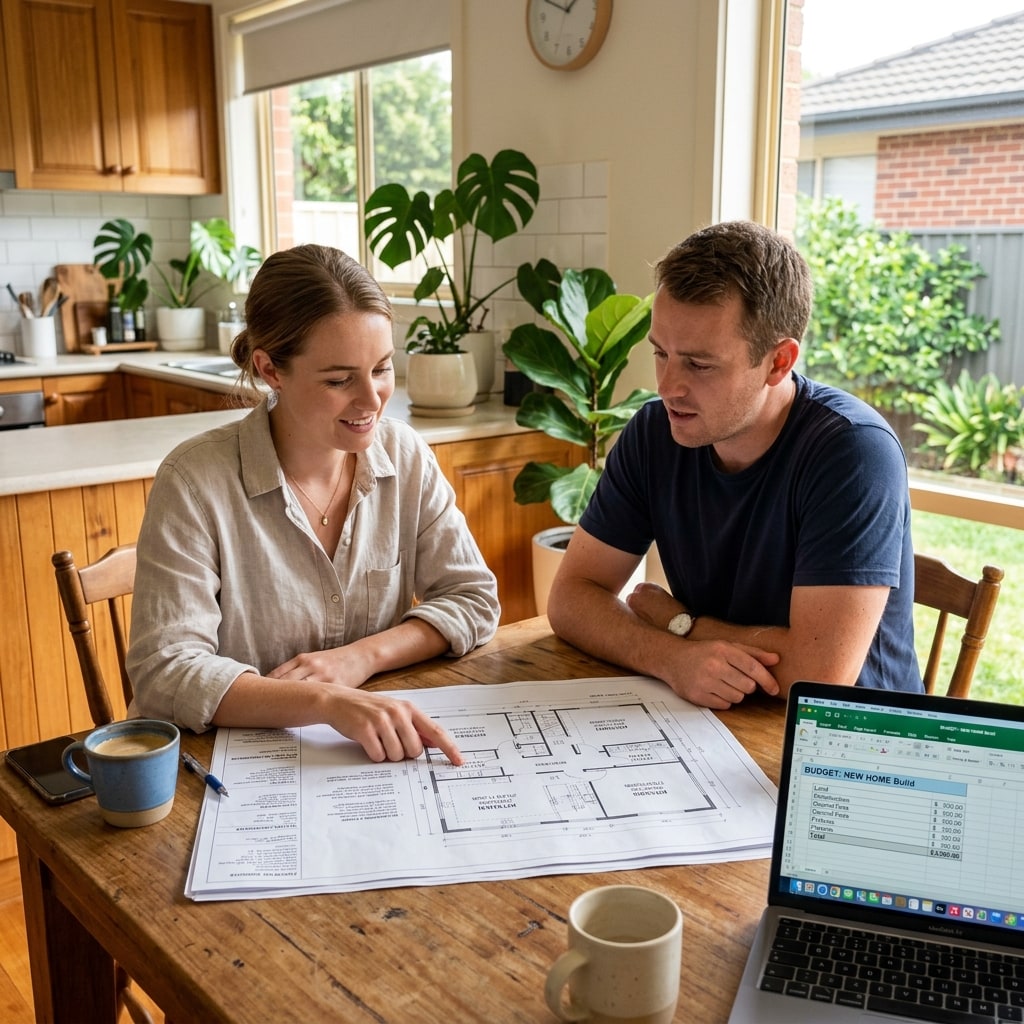
You have your draftsman plans in hand and a vision for your future home. Now comes the part that surprises most first-time buyers: understanding what it actually costs to build it. The gap between a beautiful set of plans and a finished house involves budgets, timelines, trades, and decisions that can feel overwhelming if you are navigating them for the first time. The good news is that this stage, while daunting, is also where the right guidance makes the biggest difference. You are not behind. You are exactly where you need to be to make smart choices.
One of the most common assumptions first-home buyers make is that managing their own trades will save money. The logic seems reasonable: cut out the builder's margin and deal directly with the plumber, the electrician, and the concretor yourself. In reality, this approach almost always costs more. Coordinating trades independently means booking delays compound on each other, and a concreting team waiting on a plumber can idle for days at your expense. Without a fixed-price contract, every variation becomes a negotiation you are not equipped to win.
A quality builder brings something that is genuinely difficult to replicate on your own: established relationships with suppliers and subcontractors built over years of consistent work. Those relationships translate into material pricing that an individual homeowner simply cannot access. When a builder orders framing timber, roofing iron, or plumbing fixtures, they are buying as part of an ongoing volume arrangement. That saving flows through to your build in ways that rarely get discussed but absolutely affect your final cost. Beyond materials, a reputable builder's fixed-price contract protects you from the single biggest budget risk in residential construction: scope creep and mid-build variations.
Variations are changes made after construction has started, and they are expensive in ways that go beyond the immediate cost of the change itself. A modification to a wall position, a door swing, or a window size once framing is up can trigger cascading costs across electrical, insulation, cladding, and joinery. Experienced builders help you work through your plans thoroughly before the first nail goes in, identifying those decisions early when they cost almost nothing to adjust. That pre-build rigour is part of what you are paying for, and it is worth every cent. First-home buyers who skip this step and try to manage it themselves often find themselves making expensive decisions under pressure, on-site, when the cost of being wrong is at its highest. A builder who communicates clearly, schedules realistically, and holds a fixed price gives you something priceless during a build: certainty.
What To Do Next
If you have your plans and you are weighing up your next move, here is something worth considering: the summer school holidays are coming faster than most people realise. For families, that window from mid-December through to late January is notoriously difficult for progressing anything. Builders are managing reduced crew availability, suppliers close for extended periods, and decision-making slows right across the industry. If you want your build to start with momentum in the new year, the groundwork needs to happen now, before the holidays arrive and everyone's attention shifts.
A quality builder brings something that is genuinely difficult to replicate on your own: established relationships with suppliers and subcontractors built over years of consistent work. Those relationships translate into material pricing that an individual homeowner simply cannot access. When a builder orders framing timber, roofing iron, or plumbing fixtures, they are buying as part of an ongoing volume arrangement. That saving flows through to your build in ways that rarely get discussed but absolutely affect your final cost. Beyond materials, a reputable builder's fixed-price contract protects you from the single biggest budget risk in residential construction: scope creep and mid-build variations.
Variations are changes made after construction has started, and they are expensive in ways that go beyond the immediate cost of the change itself. A modification to a wall position, a door swing, or a window size once framing is up can trigger cascading costs across electrical, insulation, cladding, and joinery. Experienced builders help you work through your plans thoroughly before the first nail goes in, identifying those decisions early when they cost almost nothing to adjust. That pre-build rigour is part of what you are paying for, and it is worth every cent. First-home buyers who skip this step and try to manage it themselves often find themselves making expensive decisions under pressure, on-site, when the cost of being wrong is at its highest. A builder who communicates clearly, schedules realistically, and holds a fixed price gives you something priceless during a build: certainty.
What To Do Next
If you have your plans and you are weighing up your next move, here is something worth considering: the summer school holidays are coming faster than most people realise. For families, that window from mid-December through to late January is notoriously difficult for progressing anything. Builders are managing reduced crew availability, suppliers close for extended periods, and decision-making slows right across the industry. If you want your build to start with momentum in the new year, the groundwork needs to happen now, before the holidays arrive and everyone's attention shifts.
