
Written by: Laurence Schuberth
Published : 04-04-2026 11:04
If a new home or renovation is on your radar, the window you are in right now is genuinely one of the best times of year to get the ball rolling. Most people wait until January, full of new-year energy, and then discover that every good builder is booked out, trades are stretched thin after the holiday break, and the approval process pushes their start date well into autumn. By then, in many parts of Australia, you are already creeping toward the wetter, cooler months that slow external work and complicate timelines. Starting in October or November means you are several steps ahead of that crowd.
The reason the spring window works so well comes down to a simple chain of events. Builder selection, site assessments, soil tests, and council or private certifier submissions all take time, and that time does not pause because you are eager. A realistic planning and approval process can run anywhere from six to twelve weeks depending on your local council, the complexity of your design, and how quickly you can supply the documentation required. If you begin those conversations now, you give yourself a genuine chance of breaking ground in January or February, right when experienced tradespeople are back from the holidays and looking to fill their schedules for the year ahead.
That January or February start matters more than many people realise. In most Australian states, late summer and early autumn offer some of the most workable building conditions of the year. Temperatures in cities like Brisbane, Sydney, Perth, and Adelaide during February and March regularly sit in the comfortable 24°C to 30°C range, with lower rainfall than the mid-year period in some regions and far less of the disruption that comes with winter wet weather in the south-east. Concrete pours, frame erections, roofing, and external cladding all proceed more smoothly and predictably in these conditions. When trades can work consistent days without weather holds, your project stays on programme and your budget is less likely to absorb the cost of delays.
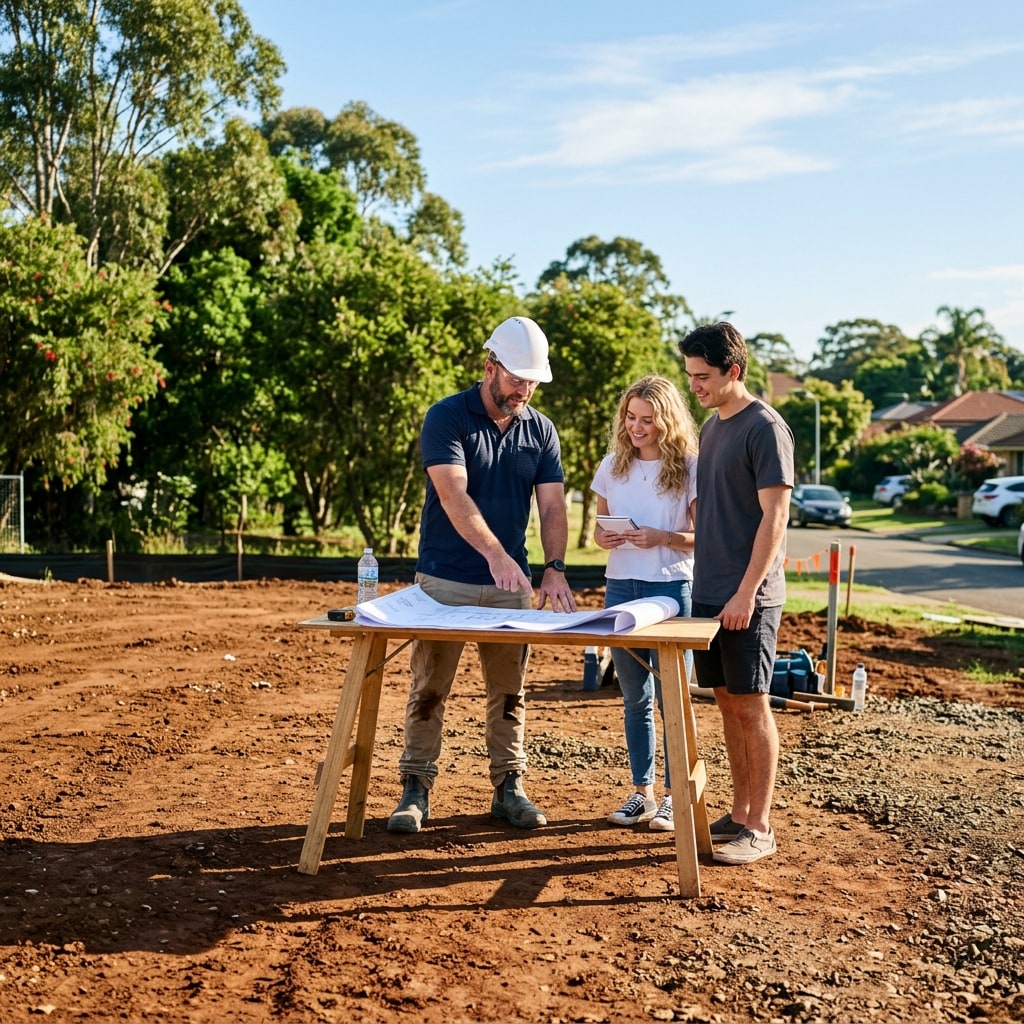
So what should you actually be doing right now, in these early spring weeks? The first step is to get a site assessment organised. Understanding your block's slope, soil classification, easements, and any overlays that apply to your land shapes every decision that follows, from your structural design to your foundation costs. The second step is to have a genuine conversation with a builder before you fall in love with a design. A builder who knows your site can tell you early whether your vision is achievable within your budget, which saves you from investing time and money in plans that will need reworking later. The third step is to begin gathering your documentation, including land certificates, any existing survey plans, and a clear brief of what you want to build. Having this ready shortens the back-and-forth considerably once formal planning submissions begin. The fourth step, and arguably the most important one, is to secure your builder. Quality builders fill their schedules quickly. If you are aiming for a new-year construction start, you want a signed building agreement in place well before Christmas, not on the other side of it.
What To Do Next
If you have read this far and recognised your own situation in it, the most useful thing you can do today is book a consultation with the team at Markham Built.
That January or February start matters more than many people realise. In most Australian states, late summer and early autumn offer some of the most workable building conditions of the year. Temperatures in cities like Brisbane, Sydney, Perth, and Adelaide during February and March regularly sit in the comfortable 24°C to 30°C range, with lower rainfall than the mid-year period in some regions and far less of the disruption that comes with winter wet weather in the south-east. Concrete pours, frame erections, roofing, and external cladding all proceed more smoothly and predictably in these conditions. When trades can work consistent days without weather holds, your project stays on programme and your budget is less likely to absorb the cost of delays.
So what should you actually be doing right now, in these early spring weeks? The first step is to get a site assessment organised. Understanding your block's slope, soil classification, easements, and any overlays that apply to your land shapes every decision that follows, from your structural design to your foundation costs. The second step is to have a genuine conversation with a builder before you fall in love with a design. A builder who knows your site can tell you early whether your vision is achievable within your budget, which saves you from investing time and money in plans that will need reworking later. The third step is to begin gathering your documentation, including land certificates, any existing survey plans, and a clear brief of what you want to build. Having this ready shortens the back-and-forth considerably once formal planning submissions begin. The fourth step, and arguably the most important one, is to secure your builder. Quality builders fill their schedules quickly. If you are aiming for a new-year construction start, you want a signed building agreement in place well before Christmas, not on the other side of it.
What To Do Next
If you have read this far and recognised your own situation in it, the most useful thing you can do today is book a consultation with the team at Markham Built.
