
Written by: Laurence Schuberth
Published : 04-04-2026 11:04
If you want a home extension ready before the summer school holidays, October is not just a good time to start planning - it is the deadline. Most Australian families picture Christmas gatherings in a brand new open-plan living space, or teenagers finally getting their own rooms before the long break begins. That vision is absolutely achievable, but only if the groundwork, quite literally, starts now. The builders who will be swinging hammers in November and December are the ones whose clients made a phone call in October. The ones who wait until November to enquire are, in most cases, looking at a project that wraps up well into the new year.
Here is why the timeline is tighter than it feels. A standard residential extension in Australia moves through several unavoidable stages before a single slab is poured. Design development, council or private certifier lodgement, and Development Approval or a Complying Development Certificate can take anywhere from three to eight weeks depending on your local government area and the complexity of the build. Add to that the time needed to finalise your contract, confirm material orders, and get trades scheduled, and you can see how quickly October becomes the last realistic on-ramp for a pre-Christmas finish.
That approval and scheduling buffer is not something any builder can shortcut on your behalf, and it is not a reason to feel discouraged. It is simply the reality of building well and building correctly in Australia. Understanding it early puts you in the strongest possible position. Homeowners who come to us in October with a clear brief can move efficiently through the design conversation, get documentation lodged promptly, and have trades lined up before the pre-Christmas rush hits. Trades in every state are busy from late October onward, and the best concreters, framers, and fit-out crews fill their schedules fast. Being organised now means you have first pick of quality tradespeople rather than whoever happens to be available.
It also means your project does not carry unnecessary financial risk. Rushed decisions made in November, when families are feeling anxious about missing the holidays, sometimes lead to corners being cut or scopes being changed mid-build. A calm October start gives your builder time to cost the project properly, order materials without expensive express freight, and manage each stage at a pace that protects the quality of the finished result. Extensions built under deadline pressure are far more likely to have issues that need attention later. Extensions that begin with a sensible plan tend to finish on time and to a standard that homeowners are genuinely proud of.
For a typical single-storey extension of around 30 to 60 square metres, a realistic construction phase in fair summer conditions runs approximately eight to fourteen weeks once approvals are in place. That means if your permits are lodged by late October and approved within a standard window, a skilled builder can have structural work complete before Christmas and finishing trades wrapping up in the early new year. Some projects, particularly those with simpler scopes and Complying Development pathways, move even faster. The key word in all of this is started. None of that timeline moves until someone picks up the phone.
What To Do Next
Reaching out to Markham Built this week does not commit you to anything. It starts a conversation, and that conversation is where everything useful begins.
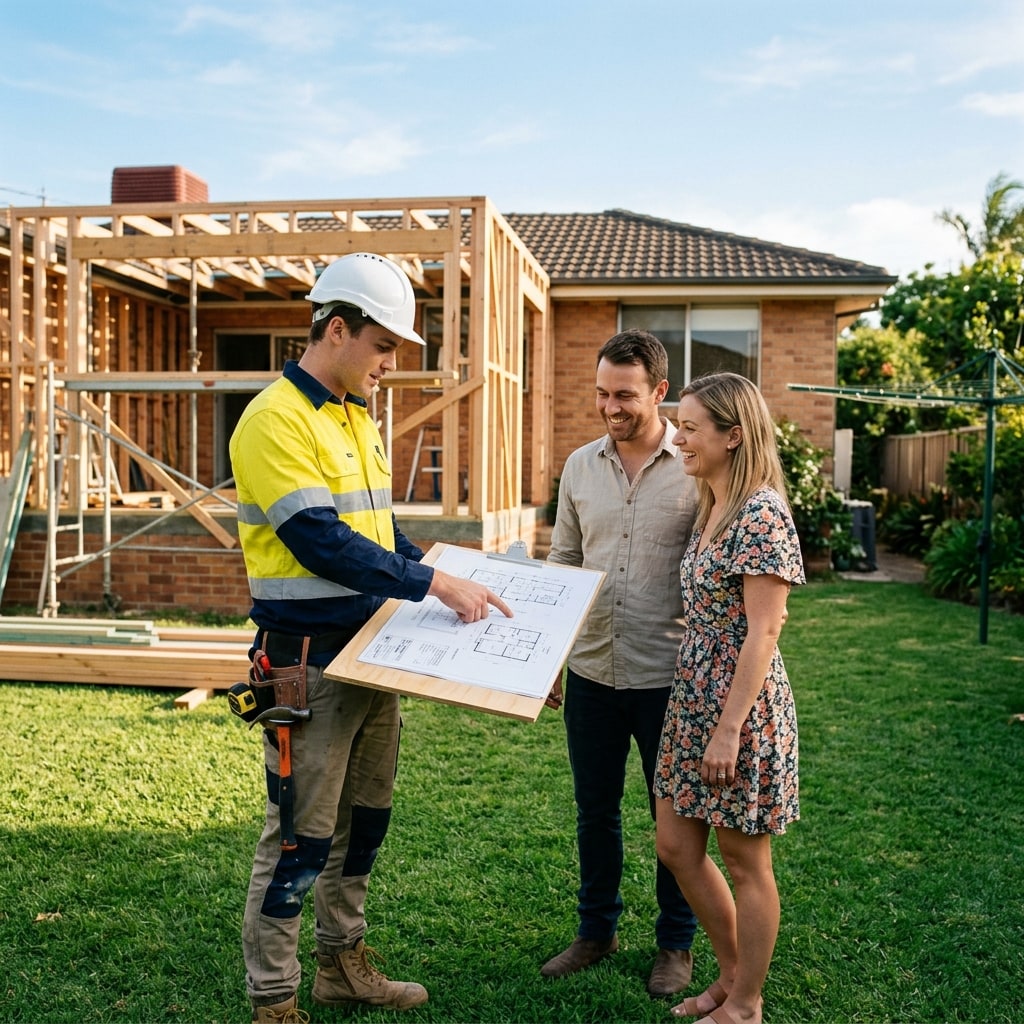
That approval and scheduling buffer is not something any builder can shortcut on your behalf, and it is not a reason to feel discouraged. It is simply the reality of building well and building correctly in Australia. Understanding it early puts you in the strongest possible position. Homeowners who come to us in October with a clear brief can move efficiently through the design conversation, get documentation lodged promptly, and have trades lined up before the pre-Christmas rush hits. Trades in every state are busy from late October onward, and the best concreters, framers, and fit-out crews fill their schedules fast. Being organised now means you have first pick of quality tradespeople rather than whoever happens to be available.
It also means your project does not carry unnecessary financial risk. Rushed decisions made in November, when families are feeling anxious about missing the holidays, sometimes lead to corners being cut or scopes being changed mid-build. A calm October start gives your builder time to cost the project properly, order materials without expensive express freight, and manage each stage at a pace that protects the quality of the finished result. Extensions built under deadline pressure are far more likely to have issues that need attention later. Extensions that begin with a sensible plan tend to finish on time and to a standard that homeowners are genuinely proud of.
For a typical single-storey extension of around 30 to 60 square metres, a realistic construction phase in fair summer conditions runs approximately eight to fourteen weeks once approvals are in place. That means if your permits are lodged by late October and approved within a standard window, a skilled builder can have structural work complete before Christmas and finishing trades wrapping up in the early new year. Some projects, particularly those with simpler scopes and Complying Development pathways, move even faster. The key word in all of this is started. None of that timeline moves until someone picks up the phone.
What To Do Next
Reaching out to Markham Built this week does not commit you to anything. It starts a conversation, and that conversation is where everything useful begins.
